


Google I/O 2026 just wrapped in Mountain View, California. Over two days, May 19th and 20th, Google put its full vision on the table: faster models, autonomous agents running in the background of your digital life, and a Search experience rebuilt from the ground up.
SoftSnow founder and co-CEO, Reid Valfer, was there in person, attending sessions across both days. This is his read on what matters and what business leaders should be paying attention to right now.
Why Google I/O 2026 Marks a Turning Point for AI Agents
One theme connected every session across both days. AI is becoming an agent that works on your behalf, running tasks continuously across your systems without waiting to be asked.
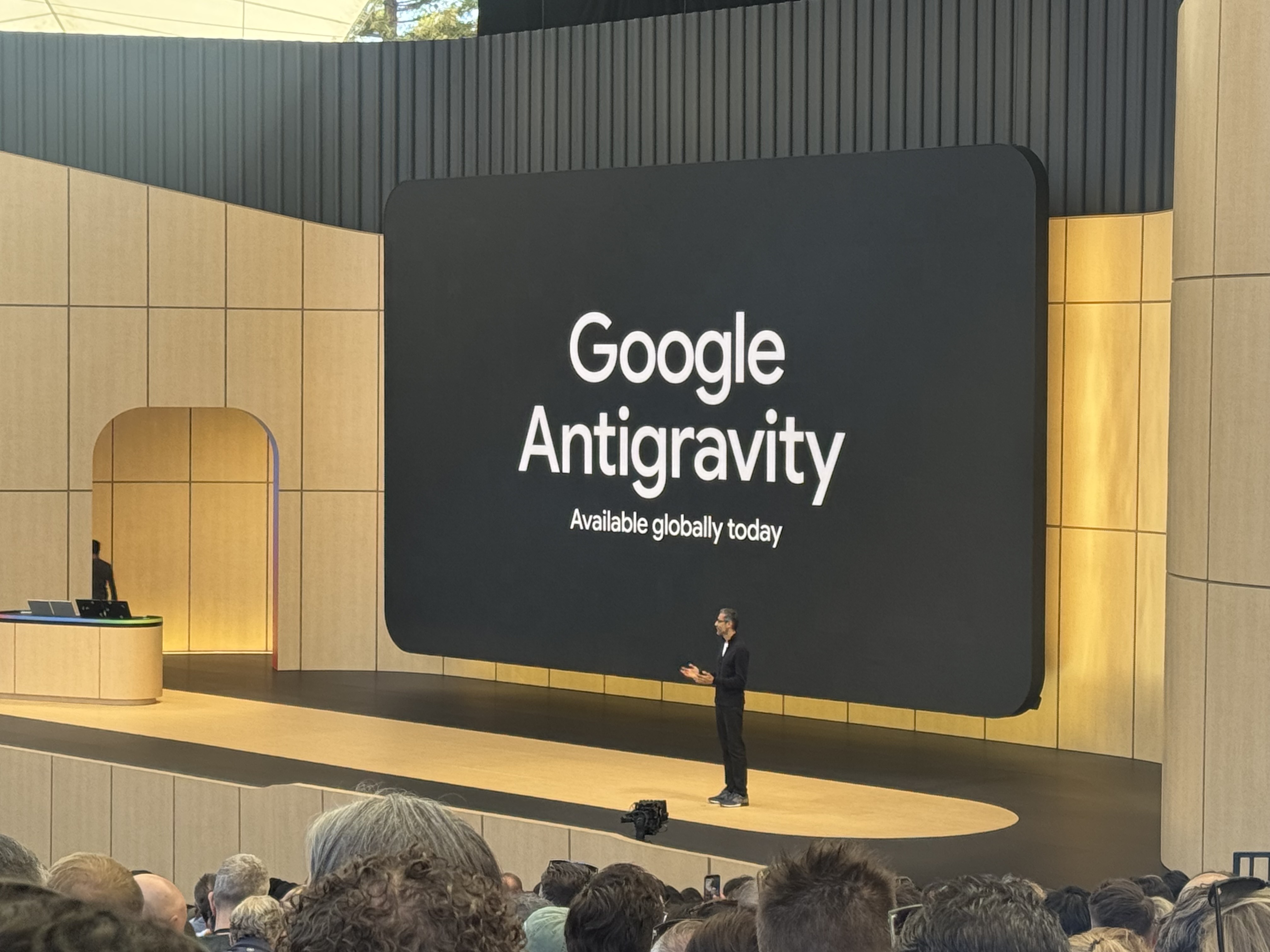
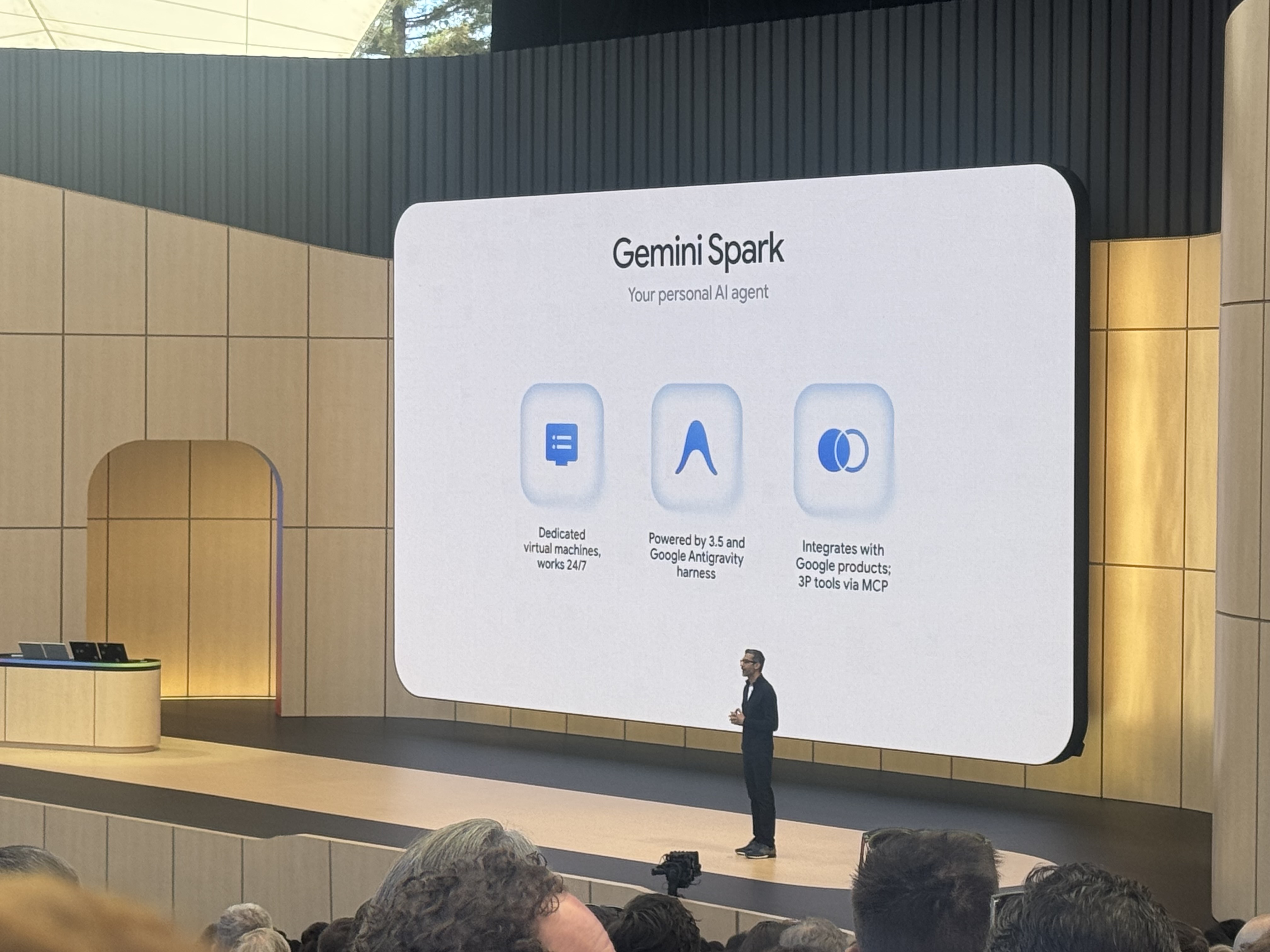
Google has spent the past year building an architecture around this idea. Gemini 3.5 Flash is the model powering it. Antigravity 2.0 is the environment where agents are built and orchestrated. Gemini Spark is the personal agent that ties it all together. These three products form one connected bet on what comes next.
That bet has direct implications for how organizations think about AI strategy today.
Gemini 3.5 Flash and the Agentic Infrastructure Behind It
Gemini 3.5 Flash is Google's new frontier model, and the speed improvement is the story. Google's internal teams are already processing over 3 trillion tokens per day using it. It runs four times faster than comparable models while handling the kind of complex, multi-step work that agents require.
What makes this relevant for business is what it enables at scale. Faster, more cost-efficient inference means agentic workflows that previously felt impractical are now accessible. Tasks that required human supervision can now run with more autonomy. The cost of deploying AI at scale drops meaningfully.
Antigravity 2.0 is the tool built to take advantage of that capability. It's a standalone desktop application for building, managing, and running cohorts of AI agents in parallel. During the developer keynote, a live demo showed Antigravity autonomously building a fully functional operating system in 12 hours for under $1,000, using parallel sub-agent teams working simultaneously.
That's a provocative number. It signals where agent-driven development is heading.
Gemini Spark: The Personal Agent Running Your Digital Life
Gemini Spark was one of the most discussed announcements across both days. It's a personal AI agent that runs 24/7 on a virtual machine in the cloud, connecting to Gmail, Calendar, Drive, and third-party tools to handle long-horizon tasks while keeping you in control.
Reid attended the "Defining the Agentic AI Era" panel with Jeff Dean, Liz Reid, Koray Kavukcuoglu, and Josh Woodward, where the conversation got specific about how Spark is already being used. Josh Woodward described his team using it for daily briefings, trigger-based research, and task drafting with explicit constraints like "draft but don't send." The agent respects those boundaries reliably.
One insight from the panel that applies directly to how organizations should design agentic workflows: user willingness to wait scales with the perceived value of the task. If an agent saves 20 minutes of work, a 2-minute wait is a reasonable trade. That principle shapes how teams should set expectations around agentic UX from day one.
Sundar Pichai added important context in his fireside session. Gemini Spark is launching with first-party integrations before opening to third-party connections, prioritizing trust and user control above speed of expansion. For any organization evaluating internal agent deployment, that measured approach is worth mirroring.
Google I/O 2026: Search, Shopping, Hardware, and Developer Tools
The event covered a lot of ground beyond the agentic story. Here's a quick look at the other major announcements:
- Intelligent Search Upgrade: Google's biggest Search redesign in over 25 years. The new experience features an interactive, AI-powered box capable of handling complex, multi-part queries. For organizations that rely on research-heavy workflows, this reduces the time employees spend hunting for information across multiple sources.
- Universal Cart: An intelligent shopping hub that works across Search, Gemini, Gmail, and YouTube, acting as a personal shopping agent across platforms. For commerce teams, this signals a shift in how buyers will discover and purchase products without leaving their AI assistant.
- Google AI Studio: Now includes native Android vibe coding support, accelerating the path from idea to production for mobile developers. Teams building internal tools on Android have a faster path from prototype to deployment.
- Voice and Design Tools: New voice capabilities across Gmail, Docs, and Keep, alongside Google Pics, an AI-powered design tool. These reduce friction for teams that produce high volumes of written and visual content daily.
- Smart Glasses: Google unveiled upcoming intelligent eyewear developed with Samsung, Warby Parker, and Gentle Monster, featuring spoken assistance and in-lens display capabilities.
- Open-Source AI Stack: Google's full TPU-based open-source stack is now production-ready. Developers can fine-tune and serve large models on Google Cloud infrastructure, or on Kaggle and Colab for free. The cost and complexity of deploying AI at scale has dropped considerably, opening access that was previously limited to well-resourced engineering teams.
Frequently Asked Questions
- What is Gemini Spark and how does it work?
Gemini Spark is a personal AI agent that runs continuously on a virtual machine in the cloud. It connects to Gmail, Calendar, Drive, and third-party tools to handle long-running tasks autonomously. Users set explicit constraints, and the agent operates within them, making it suited for organizations that want AI assistance without losing visibility or control.
- What did Google announce at I/O 2026 for enterprise teams?
The most relevant announcements for enterprise teams include Gemini 3.5 Flash for faster agentic workflows, Antigravity 2.0 for building and orchestrating AI agents, the Intelligent Search upgrade for complex research queries, and the open-source AI stack that reduces the cost of large-scale model deployment.
- How should business leaders respond to Google's agentic AI announcements?
The highest-value starting point is identifying which workflows in your organization currently require the most human coordination overhead. Those are the strongest candidates for agentic automation. From there, assessing your data readiness and change management capacity will determine how quickly you can move from pilot to production.
The SoftSnow Take: The Agentic Era Is Not Hypothetical
Google I/O 2026 made one thing clear. The agentic era is the current direction of every major AI investment Google is making, from the model layer through to consumer products.
The organizations that pull ahead are the ones with a clear picture of where AI creates value in their operations. They build workflows designed around that insight. They pair implementation with the change management that makes adoption stick.
What we saw at I/O reinforces something we work through with clients regularly. Technology moves fast. Organizational readiness is the highest-value investment right now. Getting there means knowing which workflows are ready for AI, designing around how your people actually work, and building the confidence that makes new habits hold.
Demis Hassabis, in his session on AI and the frontiers of science, put a stake in the ground: he believes full AGI arrives around 2029 to 2030. Whether that timeline holds is less important than what it signals. The pace of development is not slowing.
Ready to Turn Google I/O Into a Real Strategy?
If the announcements from Google I/O 2026 raised questions about where your organization stands on AI readiness, let's talk. We can help you assess your current workflows, identify where agents create the most immediate value, and build the roadmap to get there.